











Good Fats vs. Bad Fats: What Parents Should Know When Planning Meals for Kids
Not all fats are bad for kids. Learn the difference between good fats and bad fats, their impact on health, and how parents can plan balanced meals.
Not All Fats Are Bad
For many parents, fats are often labeled as “unhealthy” and blamed for weight gain or obesity. In reality, children need fats for brain development, nervous system function, and vitamin absorption. The key is not to eliminate fats, but to distinguish between good fats and bad fats when creating a balanced diet.
👉 Understanding fats correctly is the key to raising healthy children without the fear of excess weight.
What Are Good Fats?
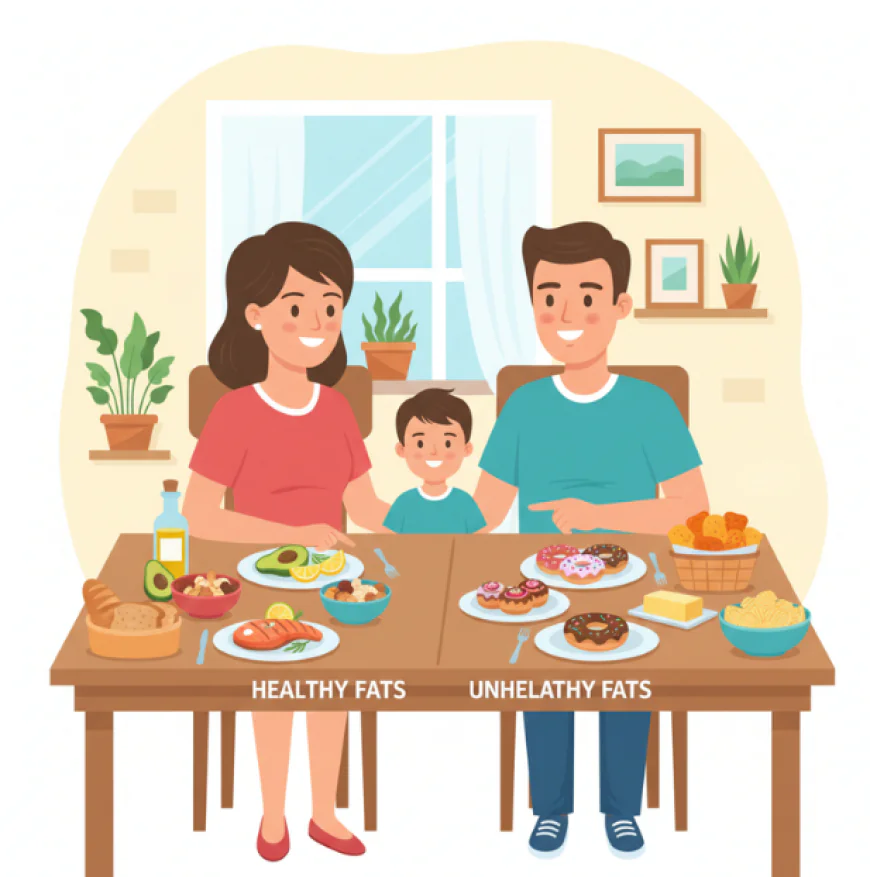
Good fats are generally unsaturated fats, which are easier to digest and beneficial for health:
-
Monounsaturated fats: found in olive oil, avocados, almonds, peanuts.
-
Polyunsaturated fats: including omega-3 and omega-6, found in salmon, mackerel, chia seeds, walnuts.
-
Benefits:
-
Support brain development and memory.
-
Help absorb fat-soluble vitamins A, D, E, K.
-
Improve heart health and strengthen immunity.
-

What Are Bad Fats?
Bad fats include saturated fats and trans fats:
-
Saturated fats: found in animal fat, butter, chicken skin, duck skin.
-
Trans fats: common in fast food, packaged pastries, chips, fried snacks.
-
Harms:
-
Increase risk of obesity, diabetes, and heart disease.
-
Raise bad cholesterol (LDL).
-
Weaken the immune system and hinder child development.
-

Recommended Fat Intake for Children
According to nutrition guidelines:
-
Ages 1–3: about 30–40% of daily calories should come from fats (mainly healthy fats).
-
Ages 4–8: about 25–35% of daily calories from fats.
-
Ages 9+: maintain 25–30% of calories from fats, combined with physical activity.
👉 Important: never completely cut fats—focus on balance and healthy sources.

Healthy Fat-Rich Foods for Kids
-
Fatty fish: salmon, mackerel, sardines.
-
Nuts & seeds: walnuts, almonds, chia seeds, flaxseeds.
-
Fruits: avocado, coconut.
-
Plant-based oils: olive oil, sunflower oil, soybean oil.
-
Dairy: whole milk, Greek yogurt (in moderation).
Tips for Parents
-
Limit fried foods, fast food, and highly processed snacks.
-
Combine healthy fats with complex carbs and protein for balanced meals.
-
Avoid over-reliance on sweets and oily packaged snacks.
-
Prefer cooking methods like steaming, boiling, or light baking over deep frying.
-
Encourage kids to eat fish at least twice a week.
Fats are not the “enemy” of children’s health but rather an essential ally for both physical and cognitive development. Parents should learn to differentiate between good and bad fats, choose nutritious sources, and maintain balanced portions—helping children grow healthy, smart, and full of energy.
What's Your Reaction?
 Like
0
Like
0
 Dislike
0
Dislike
0
 Love
0
Love
0
 Funny
0
Funny
0
 Angry
0
Angry
0
 Sad
0
Sad
0
 Wow
0
Wow
0