












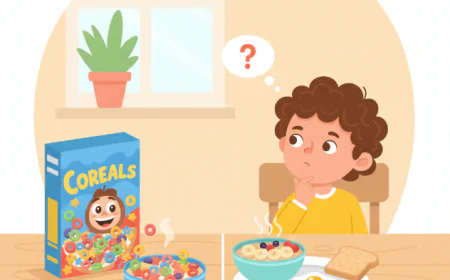

5 Common Nutrition Mistakes Parents Often Make (Without Realizing It)
Discover 5 common nutrition mistakes parents often make and learn how to fix them. Practical tips to support your child’s healthy growth and habits.
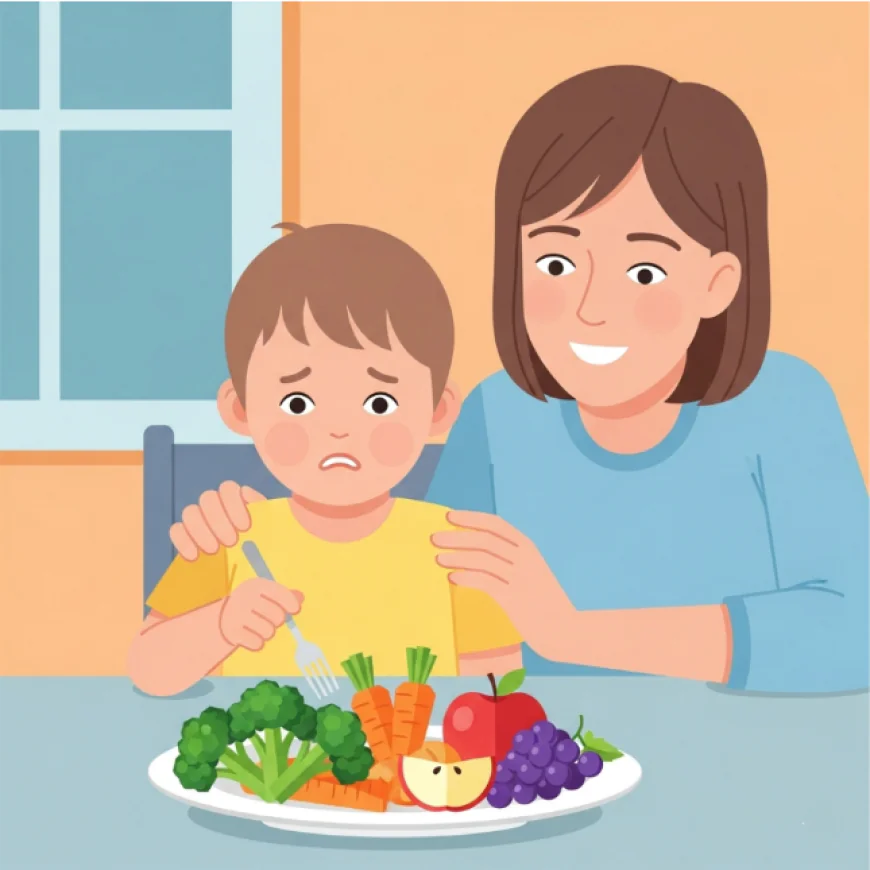
Every Parent Wants the Best
Every parent wants their child to grow strong and healthy. Yet along the way, well-meaning habits sometimes turn into nutrition mistakes. What looks “right” at first—an extra spoonful, more milk, a pinch of salt—can quietly affect a child’s long-term health.
👉 The reassuring news: mistakes can be fixed. Understanding the most common nutrition pitfalls helps parents feel confident, less stressed, and better equipped to guide their child’s growth.
Here are 5 frequent nutrition mistakes parents unknowingly make—and practical tips to avoid them.
Mistake 1: Thinking “the more they eat, the better”
-
Parents often fear their child will be hungry, so they push bigger portions.
-
Consequences: overeating, obesity, digestive problems.
-
How to fix it:
-
Watch hunger/fullness cues (turning head away, closing mouth).
-
Respect appetite—don’t force-feed.
-
Keep structured mealtimes.
-
Mistake 2: Cutting out fats completely to prevent obesity
-
Some parents avoid oils, butter, nuts, fearing weight gain.
-
Reality: healthy fats (omega-3, omega-6) are vital for brain, vision, and hormones.
-
Fix:
-
Add olive oil, avocado, salmon, chia seeds.
-
Limit fried/junk foods instead of removing fats entirely.
-
Mistake 3: Relying too heavily on milk
-
Some children drink 1–2 liters of milk daily → refuse solids, lack fiber, get constipated.
-
Milk is supplementary, not a replacement for meals.
-
Fix:
-
Stick to age-appropriate amounts.
-
Offer balanced meals with veggies, grains, proteins.
-

Mistake 4: Too much sugar and salt
-
Sugar: candies, juices, processed snacks → cavities, obesity.
-
Salt: adding seasoning too early → kidney strain, future hypertension.
-
Fix:
-
No added salt before age 1; keep low afterward.
-
Minimize processed foods.
-
Let children taste the natural flavor of whole foods.
-
Mistake 5: Comparing your child’s appetite to others
-
Parents worry: “Why does my child eat so little compared to others?”
-
Leads to pressure and force-feeding → mealtimes become stressful.
-
Fix:
-
Every child has unique needs and growth speed.
-
Track growth with WHO charts, not just visual comparison.
-
Focus on making mealtime fun and bonding.
-

Mistakes Are Lessons, Not Failures
Parenting doesn’t come with a perfect recipe. Nutrition mistakes are simply part of the learning journey.
👉 What matters most is not how much a child eats, but whether they eat enough, balanced, and joyfully. With patience and the right guidance, parents can build healthy eating habits that last a lifetime.
What's Your Reaction?
 Like
0
Like
0
 Dislike
0
Dislike
0
 Love
0
Love
0
 Funny
0
Funny
0
 Angry
0
Angry
0
 Sad
0
Sad
0
 Wow
0
Wow
0